
Services / Ceramic window tint
Ceramic window tint
Ceramic film uses non-metal particles to reject infrared heat. You feel it in a darker cabin and, more usefully, in a lighter legal shade that still knocks the temperature down.
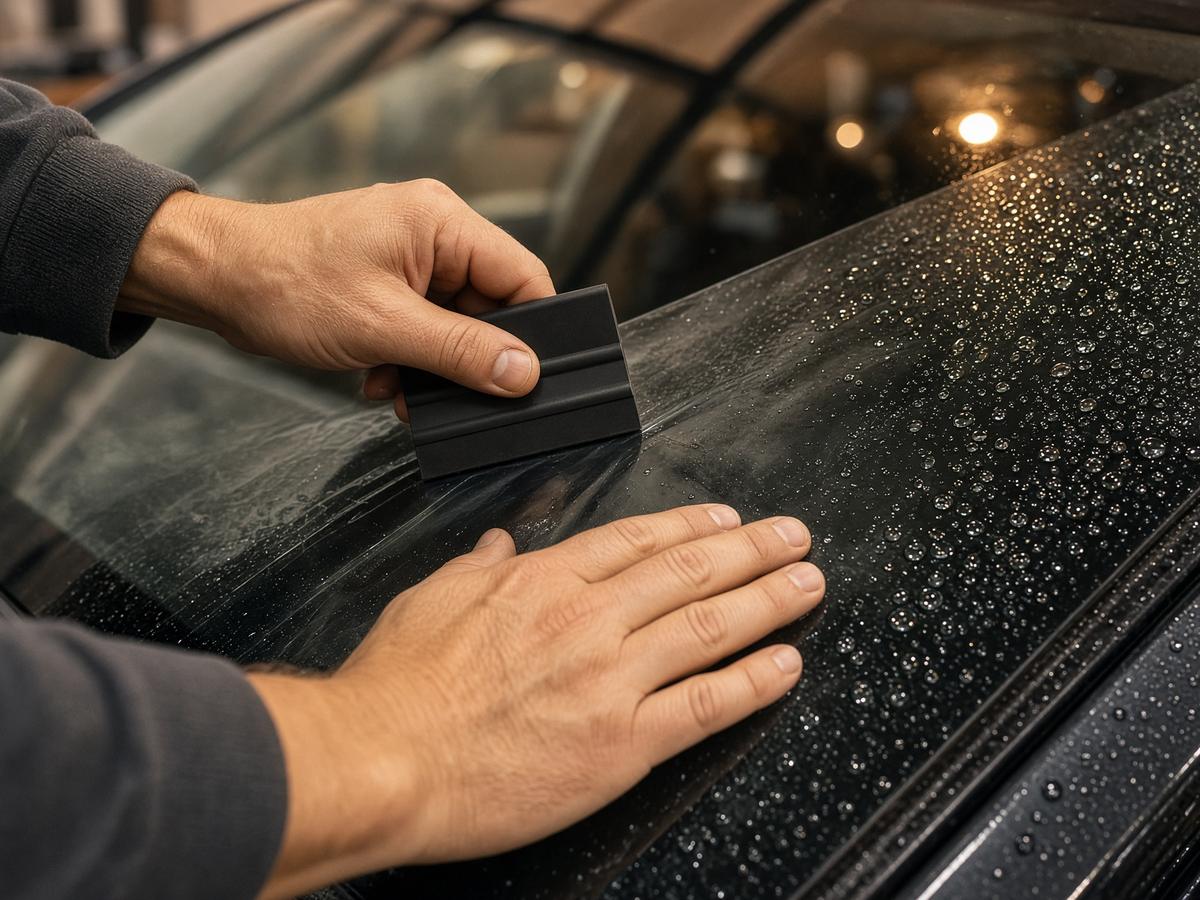
Why ceramic costs more
Dyed film mostly absorbs heat into the glass. Ceramic reflects a larger share of the infrared that actually heats a cabin and a room. That is why a 35% ceramic can feel cooler than a 20% dyed shade, and why it is the film we put on cars that have to stay legal on the front doors.
It also stays neutral. You do not get the purple fade of cheap dye, and you do not get the mirror look or the signal trouble of metal film. Phone, GPS, and toll tags keep working.
Where it earns the upgrade
Pay for ceramic on glass that sees hours of sun: front doors, panoramic roofs if the vehicle has film-safe glass, west windows in a house, and any storefront that faces the street with no awning. Back glass on an SUV that you are already taking to a dark shade is where carbon or a solid dyed film can still make sense.
We go over the spec sheet for the exact roll before you book. Heat-rejection numbers move with the shade. Anyone promising one percentage for every window is selling a slogan.